Letter to The Age

Arrogance on both sides

Kevin Rudd’s promise, like Tony Abbott’s, that there will be no deals in the case of a hung Parliament makes a mockery of our democracy. Our democracy, largely thanks to the upper house, allows for the presence of alternative views in a political situation where the two major parties differ on very little; it is not for Mr Abbott or Mr Rudd to so arrogantly dismiss views that do not correlate precisely with their own.

Mr Rudd’s motivation appears to be to exorcise the ghost of Julia Gillard. He should grow up, and offer her the respect she deserves. She’s the one that got legislation in place to address the ‘greatest moral challenge of our age’, while he skulked in the background biding his time.

Published in The Age on 16 August 2013. It’s the second letter on this page. And the Leunig cartoon here is very good!

The canary in the coalmine, the butterfly on the hill: Flight Behaviour

Flight Behaviour coverBarbara Kingsolver’s fourteenth novel, Flight Behaviour, is set in Tennessee. The characters are firmly rooted in a primarily pastoral landscape that turns out to be unstable, though most in the novel refuse to acknowledge the changes.

Dellarobia, the feisty young mother trapped in a domestic situation where her only outlet is crushes on local tradesmen, learns to see that the land on which their lives are based is changing before them. In doing so she recognises too the instability of the human landscape.

The book opens with Dellarobia in full flight, albeit in unsuitable shoes, up a mountain towards an extra-marital tryst. But the sight of mountain ranges aflame – not with fire but with something she cannot comprehend – sends her home again, with the sense that running away is not the answer.

The orange flame turns out to be millions of monarch butterflies, a beautiful ‘miracle’ that is the result of a horrible truth. Climate change is rearing its head in a town where people say that the weather is in the Lord’s hands. It changes Dellarobia’s outlook completely. Unlike most of those around her, she doesn’t have much faith in God, and is open to science and to encouraging her intelligent, questioning kindergarten-aged son in a way that few others are.

This is working-class rural America, where college isn’t part of the life plan, where people are judged if they don’t attend church, where floods and orchards rotting in the earth are all attributed to God’s will. But it is the poverty that is an unexpected feature of this novel; while Australians might perceive middle America as overweight and subsisting on junk food, this is a family that hasn’t had take away or eaten in a restaurant in two years.

This is a book about class and about the division of ideas. It is also about denial, and about the lack of security in both the earth and in each other as human beings. Dellarobia, never knowing what else there was to aspire to, sustained herself with crushes on men who were not her husband. Now a world opens to her that is both terrifying and much broader than anything she has ever known.

Kingsolver returns to her theme of religion in this novel – Dellarobia, despite being thrown out of Wednesday bible discussion for having the temerity to actually discuss, weaves bible metaphors into her thoughts throughout the book. Flood and fire: while the bible bashers deny that it is upon them, she is confronted with it through the evidence of science.

The ending of Flight Behaviour has been widely criticised, and while I share some of the criticisms the novel ultimately tells a powerful and imaginative story. It is a book that should be read, because from it there is so much to learn.

Land, sea and misogyny

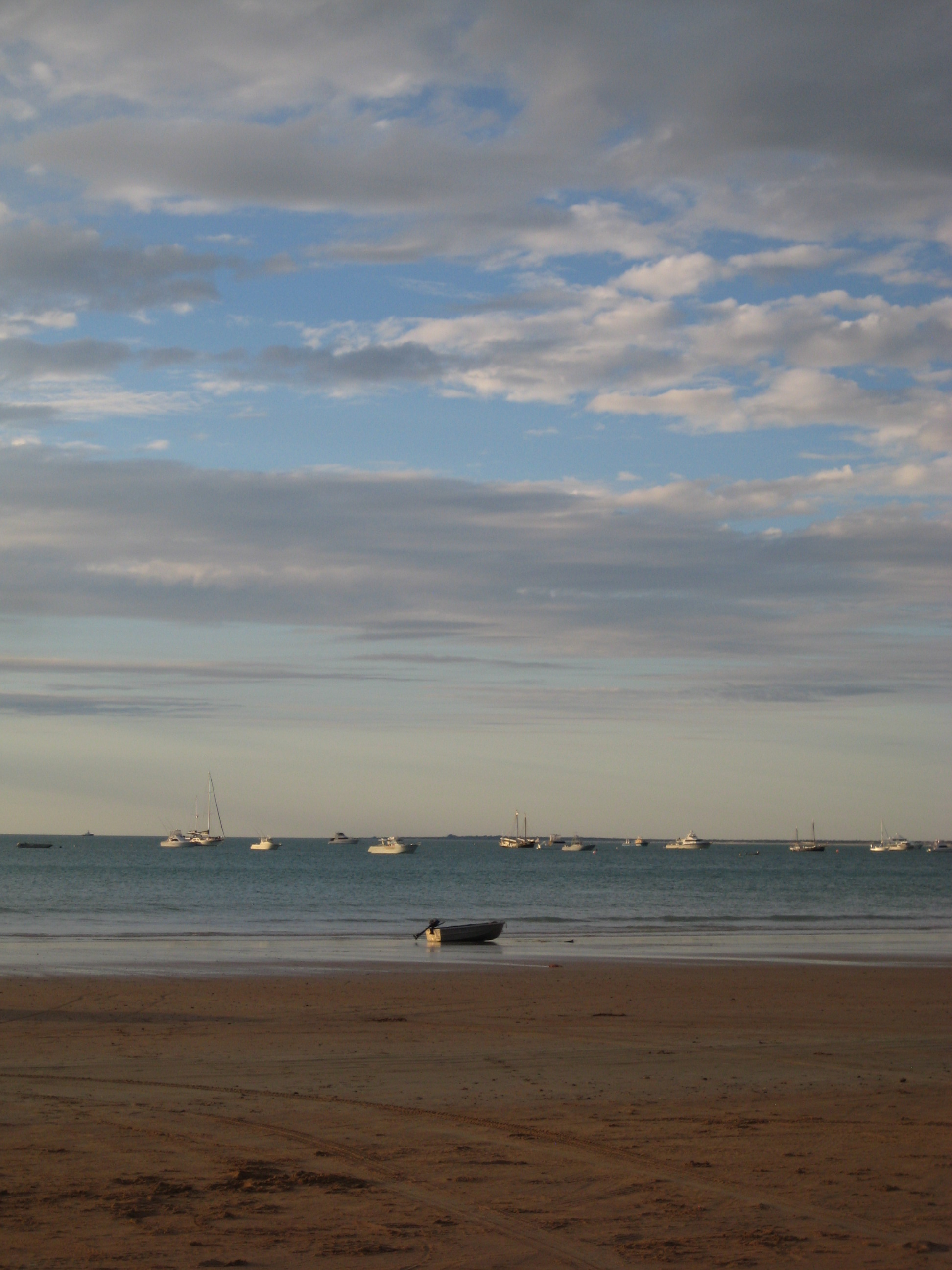
Broome beach and dinghyWhere to begin?

After three weeks away, mostly thinking of the sea, it is hard to know where to begin writing now that I am back on land, in a cold city, back engaging with the political landscape, albeit slowly and without my usual enthusiasm.

I’m far from the warm northern waters that I have been floating on for ten days. While I was away I wrote often of the sea, as I watched its changing moods from the safety of the cockpit on a six day voyage.

When I reached land on the northwest fringe of the continent, the texture of hills far to the south came flooding back into my thoughts, even as I noted the red Kimberley dirt and tried to divine some sense of understanding of this place where red sand meets blue water.

On the day we arrived in Broome and dropped anchor in Roebuck Bay, just after the nine metre spring tides, we tuned into the news in time for the Labor leadership spill. We had left Indonesia six days earlier with a female PM still in charge in Australia, and arrived in Western Australian waters to find the male PM returned.

Now I am reading Anna Goldsworthy’s Quarterly Essay, alongside Kim Mahood’s Craft for a Dry Lake, while The Long Way by solo sailor Bernard Moitessier waits on my desk. Land, sea and misogyny: three threads that are mingling and meeting now that I am home, away from the sea but with the motion of the waves still in my blood as it always will be.

Where to begin?

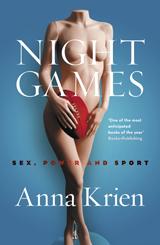
Stories and weapons in Anna Krien’s Night Games

Night GamesAnna Krien’s Night Games is a fascinating exploration of football, rape and the justice system, and like Krien’s previous works there are no easy answers to the questions it raises.

Night Games focuses on the trial of a young man, Justin Dyer*, for the rape of a young woman, Sarah Wesley*. The incident took place early in the morning after Collingood’s AFL Grand Final victory in 2010. Earlier that night, Sarah had had sex with or been raped by three other men – two of whom were Collingwood’s Dayne Beams and John McCarthy.

The question of whether Beams and McCarthy raped Sarah is never answered, because they are not charged and the events of earlier in the night are shaded out of the narrative told by both defence and prosecution during Justin’s trial.

The case thus neatly sidesteps the AFL players involved and instead focuses on the hanger-on, a young man who is a player in the VFL and who is immediately dropped from his team when rape charges are laid. Continue reading

The power of words: Love and Fury

Love and FuryI have just finished watching Love and Fury: Judith Wright and ‘Nugget’ Coombs on ABC. It documents the clandestine relationship between these two intellectual Australians, mainly through their letters, which were released from embargo in 2009.

As The Australian’s article in the Review over the weekend warned, this is a powerful documentary, and I am moved to immediately record my thoughts. The relationship between Wright and Coombs is inspiring – the exchange of ideas led to each of them feeding one another’s passions and work.

Their relationship began the year Gough Whitlam came to power, and through the film clips of his three years in power I was first and foremost touched by the intellectual arguments of the day. There is often a sepia hue to the social movements and the radicals of the past, but Whitlam’s legacy has always been about the power of ideas to make change. Coombs was directly part of this, as a consultant to Whitlam.

There is a clip of Gough Whitlam in 1975 with a handful of red dirt, his hand poised over Vincent Lingiari’s as the soil slips from one hand to the other. There is Whitlam speaking of how all Australians are diminished while Aboriginal people remain dispossed of their land. These moments are part of history, yet Whitlam’s actions and words are powerful, and from across the decades I am moved. Continue reading

The good that was buried by the story of Labor’s non-spill

Last Thursday’s events in Canberra demonstrated three things very clearly. One, the hypocrisy of Opposition rhetoric. Two, the successes of feminism, and three, how far feminism still has to travel.

The hypocrisy is evident in the immediate accusations of ‘bad government’ that predictably flowed from Tony Abbott after the leadership near-spill.

Once again came the accusations of a government who is not doing anything, who is not succeeding, who makes bad decisions. Comments that got plenty of air on Thursday and Friday because of the news value placed on leadership.

But in those comments, Tony Abbott intentionally overshadowed the bipartisanship which saw the House of Representatives accept Senate amendments to the National Disability Insurance Scheme, meaning that it had passed into law earlier that day.

Continue reading

When inside and outside don’t match

Walking to the bus this morning, it is a perfect summer’s morning.

The air is cool, the sun is bright but low, the heat of the day hidden for now in the bluest sky.

It is beautiful, even with traffic, even knowing the heat will come, even with a day in an office ahead.

But today is not just any day; it is the birthday of someone very special who is no longer here. The first birthday will always be the worst – at least, I hope so.

Scar

I remember that this is one facet of grieving – feeling this disconnect between inside and out; memories and feelings that don’t match the outside world.

Nothing has changed, yet everything has.

This sunny busy optimistic suburb is a long way from home, a long way from what we have lost. (It is not just me – I imagine us as a web of people, all across this city, up in the high country, across the continent, who will look at the date today and remember, and in so doing will strengthen the shared memories and past that lie between us all.)

Here, on a birthday, I am too far away, unable to go to the place that would offer both comfort and pain.

And I am also too close, for those hills and that skyline and the sound of that river are just there, as they will be forever.

Summer battlefields

It has happened, gradually but surely – fire now so a part of every Australian summer that we head into the hot weather as though into a war zone, prepared for loss, aware that at some level loss is inevitable.

Like war zones, we watch fire on our TV screens and see the photos in the paper. Like in war there are the heartbreaking stories of survival; everyone’s favourite is Sam the koala drinking from a firefighter’s water bottle in 2009.

We watch all this on TV or turn on the radio driving home to listen. But most war zones are far away from our quarter acre blocks in the suburbs or our city apartments.

Not here, not with the fires. Melbourne, so often ensconced in its own little world, was shocked by being blanketed in smoke in 2009. I dropped in and out of the city early that year, passing through a few weeks after the fires; Melbournites were still stunned at this encroachment so close to their big safe city.

And it’s close every year, every bad fire season. Even for those of us living in the city. It’s our relatives, the farmers who grow our food and wool, the tree changers of my parents’ generation, the friends from rural areas that we made at uni or in the workplace – these are the people in the war zones of 45 degree temperatures, 40 knot winds, and fire.

I’ve never been dangerously close to a bushfire. But close enough. A spot fire over the hill, quickly burnt out due to lack of fuel load after a drought. Fires on the ridge beyond a relative’s property, flames burning down a cousin’s driveway. A house lost in the big town up the valley. Cleaning out the gutters, nailing shutters over windows and gratings, testing the fire pump. Watching the weather through the summer, worrying about the animals. Keeping in touch with the relatives to see if everyone’s alright. Trimming the horses’ tails. This is close enough.

I don’t have any of my red photos from the 2003 fires. They were all red or orange or brown; even photos inside the kitchen seem tainted by the red sky outside. So here is one of the mountains instead, years after the fires, but with the scars still present, and one brave little hut in the middle of it all.

Spargo Hut, Mount Hotham. Flickr/Tony Marsh

Spargo Hut, Mount Hotham. Flickr/Tony Marsh

Art and nature: Sunday Reed and Autumn Laing

When I finished reading Alex Miller’s latest novel, Autumn Laing, a coincidence led me to a book that Miller himself read in the process of creating Autumn Laing. This latter book is The Heart Garden: Sunday Reed and Heide, by art historian Janine Burke.

To simply move from one of these books to the other is no great step, as Autumn Laing is loosely based on the historical figures of Sunday and John Reed, patrons of modern art in Melbourne, and on Sidney Nolan, Sunday Reed’s lover who lived for many years with the Reeds at their home, Heide, now the Heide Museum of Modern Art.

But I would perhaps not have gone on to read The Heart Garden were it not for my internship at The Conversation. I came across a press release about Janine Burke’s latest book Nest: The Art of Birds, and contacted Janine to ask her to write a short piece for us, not yet aware that she was Sunday Reed’s biographer. Continue reading

The words behind the image

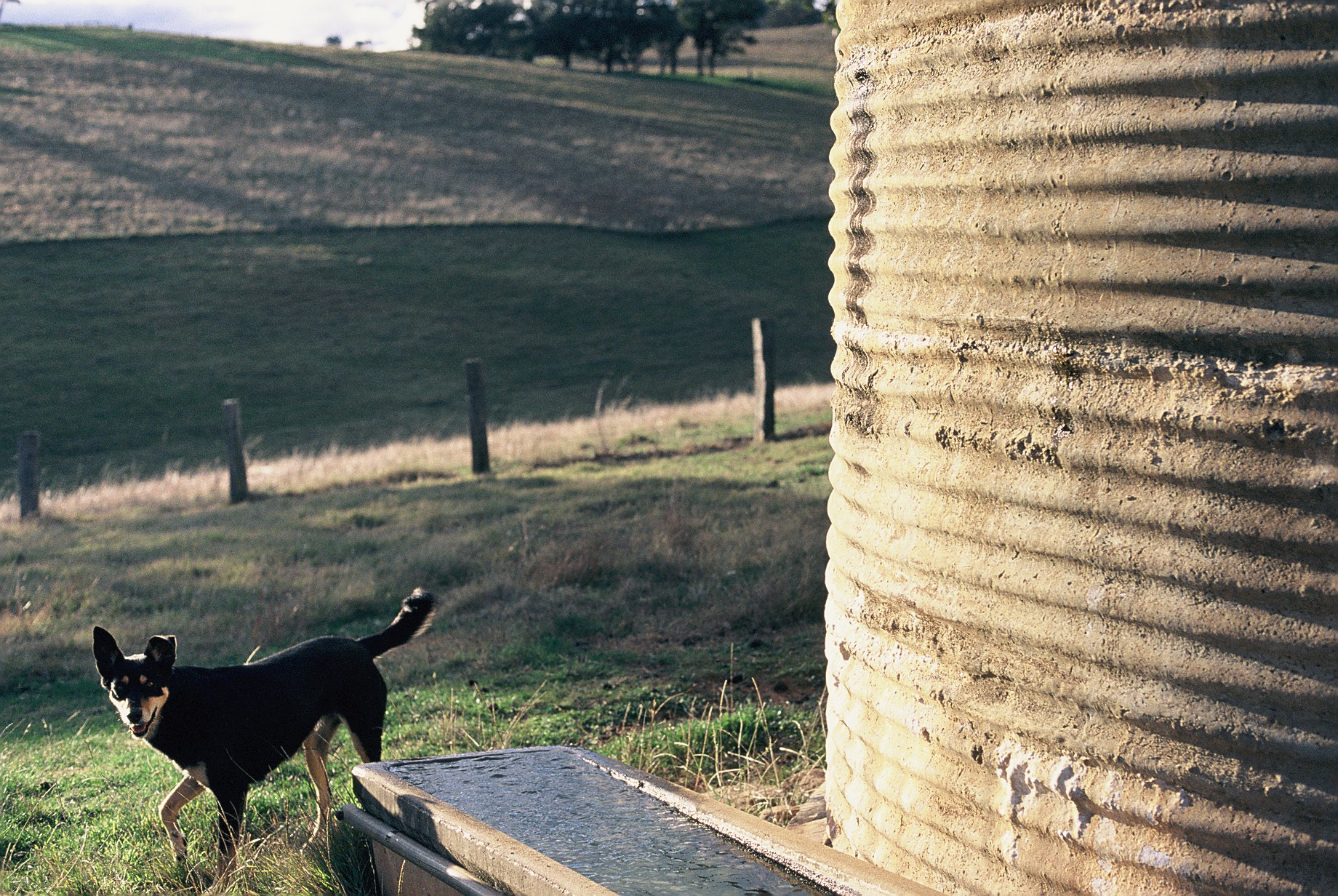
The morning light distils the cold air into something sweet and fresh. The layers of the hills are a patchwork of muted colours and texture at this time, as the sun, far to the north, illuminates them in turn, and the patterns on their faces emerge gradually into the light.

There is, as always in this land, a mix of nature close alongside that which is made and managed by humans. The textures of pasture and corrugated tin, of fence post and gumtree, of river water and bridge, complement and highlight one another on this land. It is land I know well, though not so well as the kelpie knows it, with her finely tuned senses and her quick feet.

On a winter’s morning in June, with the three young kelpies and the old border collie cross following me everywhere I went, I did not know that it was the dog in this photo that would end up with me. I thought – hoped – that she might, but we were all in limbo then, nothing certain.

Now we are far away, the dog and I, but I think often of that morning. A roll of slide film, brisk mountain air, trying to capture a ghost of the landscape while I still could. At the homestead, away to the left, smoke rose from the chimney.

But it was the last days, and the dogs knew it. On a day like today, the sun and cloud will be playing patterns with the wind on the water of the trough, undisturbed by us.

* * *

Perhaps a good photograph should stand alone, capable of telling a story without the need for words to explain it. But I am a writer first and foremost, from long before the days when I started to think in terms of images in a camera.

So for me part of the attraction of photography is the opportunity it presents for an interplay with words.

In previous years at Unsensored I have sought to explain or enhance my images to some extent with words. Not to explain in terms of where, why, how, but to suggest my own thoughts in relation to the image; to give a hint of what it meant to me.

This year, however, the image I exhibited bore no neat, four line explanation. I tried, covering pages with notes and images as I tried to pull out the words that would say enough, but not too much.

But I couldn’t do it – I could not condense what this photograph meant to me into just a few lines. I still can’t, but now, in the aftermath of the exhibition, with the photo on my wall and the dog outside my window in the sun, a blog gives more space than an image card could, so that I might try and say just a little of what it means.

Image: Olympus OM-1N, Fuji Sensia 200, expired. Click to view large.